 0
0
 0
0
For many Nigerians, one question remains unresolved:
Why did we have to go through such painful economic reforms after the Tinubu administration assumed office in May 2023?
Some have concluded, often out of frustration, that the hardship was simply the result of hasty government policies. Others believe the measures were unnecessary and that the government deliberately chose a difficult path.
But is that really what happened?
Should a government that inherited an economy on the brink of fiscal collapse and took difficult decisions to stabilise it be condemned or commended, especially when those decisions are increasingly showing signs of restoring economic stability?
The purpose of this piece is not to defend any political party or provoke emotional reactions. It is to examine, as objectively as possible, some of the questions many Nigerians continue to ask about the reforms, even as the gains become increasingly visible, the conditions that made those reforms necessary, and whether history may ultimately judge those decisions differently from how they were initially perceived.
Here are some of the most common questions, followed by straightforward answers grounded in economic realities, fiscal evidence and the facts available to the public.
Q: If the reforms were so painful, why were they necessary?
By May 2023, Nigeria’s economic model had become unsustainable.
The country was spending beyond its means, borrowing heavily, financing consumption instead of productivity, and accumulating distortions that could no longer be maintained.
The reforms were not introduced because everything was working.
They were introduced because the old system was failing.
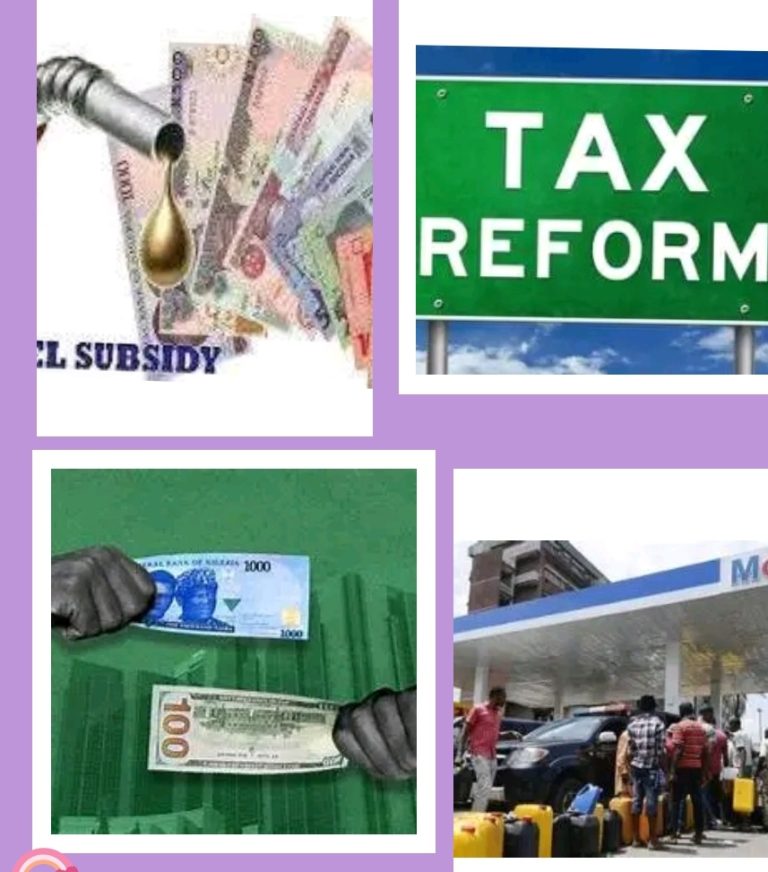
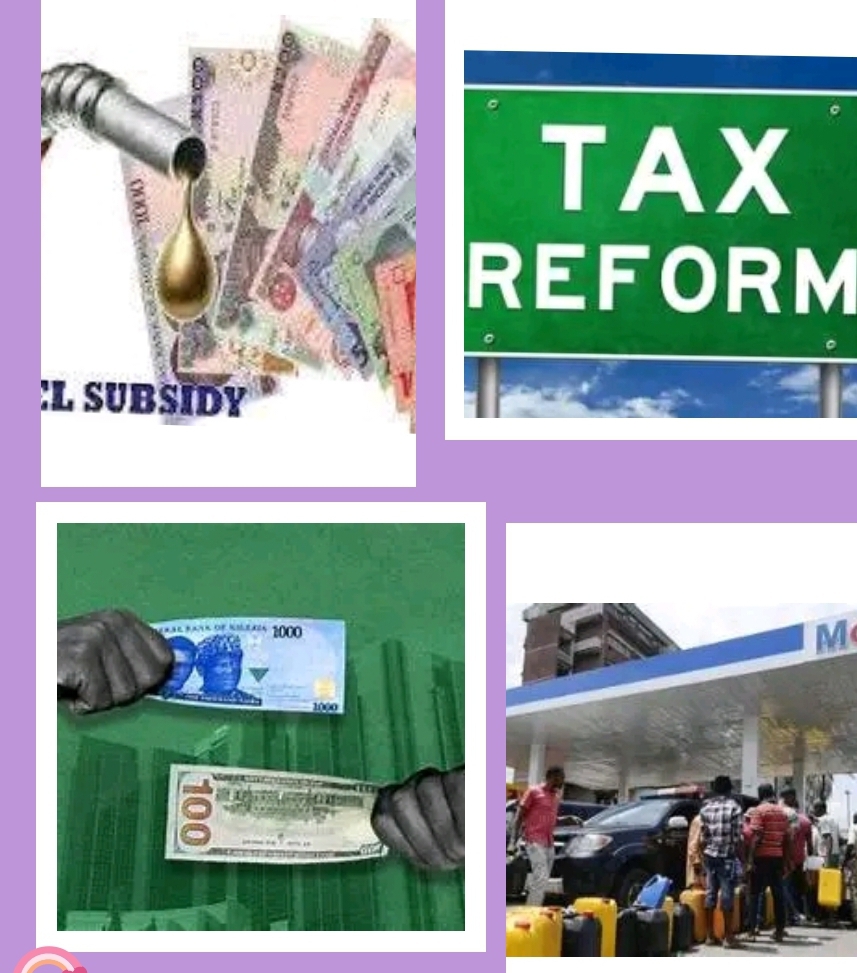
Q: Why was fuel subsidy removed?
The 2023 Budget made no provision for fuel subsidy beyond 30 June 2023.
Even before that date, continuing subsidy payments was becoming increasingly difficult because the government’s finances were under severe strain.
The real question is not why subsidy was removed.
The real question is:
Where was the money going to come from to continue paying it?
Q: Could NNPC not generate enough money to support government finances?
Ironically, that was one of the biggest problems.
NNPC, which should have been Nigeria’s primary revenue-generating institution, was itself burdened by substantial debts and obligations.
The Tinubu administration had to cancel approximately $5.3bn in NNPC’s legacy debt to the Federation Account in order to restore the company’s financial viability and halt the practice of continually mortgaging future crude production through forward sales.
Think about that for a moment.
If the nation’s cash cow was itself indebted and unable to remit optimally to government, where exactly were the resources supposed to come from to fund infrastructure, healthcare, education, security and development?
Q: Was Nigeria’s debt situation really that serious?
Yes.
The country was carrying the burden of approximately ₦27tn in Ways and Means financing, alongside mounting debt obligations, multiple exchange rates, subsidy liabilities and other structural distortions.
But perhaps the most alarming indicator was the debt service burden.
Q: What does a debt service-to-revenue ratio of about 97% actually mean?
It means that for every ₦100 earned by government, nearly ₦97 was going towards servicing debt.
Only about ₦3 remained for:
Roads and infrastructure
Healthcare
Education
Security
Social interventions
Economic development
No responsible government can sustain such a situation indefinitely.
Q: Could government have simply continued with the old system?
No.
The old system was precisely the problem.
Continuing fuel subsidies without funding, printing more money, maintaining multiple exchange rates and accumulating more debt would not have solved the crisis.
It would merely have delayed the inevitable while making the eventual adjustment even more painful.
Q: Does this mean every reform has been perfect?
Not at all.
Reasonable people can debate the pace, sequencing and social impact of the reforms.
They can question implementation gaps and demand stronger support for vulnerable citizens.
Those are legitimate debates.
What is far less convincing is to ignore the economic conditions that necessitated the reforms and then blame the reforms for the existence of those conditions.
Q: What is the one thing Nigerians should understand about this period?
The reforms did not arise in a vacuum.
They were a response to a fiscal emergency, an unsustainable subsidy regime, an indebted NNPC, excessive monetary financing, a crushing debt burden and deep structural distortions across the economy.
In simple terms, the intervention was a response to a crisis that already existed.
Final Reflection
A nation does not arrive at the edge of a fiscal cliff overnight.
The conditions Nigeria confronted in 2023 were the result of decades of accumulated policy distortions, excessive borrowing, unsustainable subsidies, weak revenue performance and difficult economic choices that were repeatedly postponed.
The more important question, therefore, is not whether the reforms were painful. Serious reforms almost always are.
The real question is whether Nigeria could have continued on the same path without confronting even greater hardship later.
As citizens, our responsibility goes beyond evaluating the decisions of any particular administration. We must also learn the lessons that produced the crisis in the first place. A nation that repeatedly rewards unsustainable policies should not be surprised when those policies eventually produce painful consequences.
The challenge before us is not merely to recover from the mistakes of the past. It is to ensure that we never again allow Nigeria to drift into a position where nearly all government revenue is consumed by debt servicing, where strategic national assets are weighed down by debt, and where difficult but necessary decisions are deferred until they become unavoidable.
Nations advance when they learn from their mistakes. Nations stagnate when they forget them.
The reforms can be debated. Their implementation can be scrutinised. Their outcomes can be measured.
But one fact remains undeniable:
Nigeria’s economic difficulties did not begin in May 2023. The reforms were a response to a crisis that already existed.
The future will be shaped not only by how we judge those reforms, but also by whether we resolve never to allow the conditions that made them necessary to return.
#reforms
#EconomicGrowth
#nigeria
#nigeriansindiaspora


About the Author