 0
0
 0
0
WHEN President Tinubu assumed office, Nigeria faced a situation in which the government was projected to spend about ₦18.4 billion every day on fuel subsidy payments, citing figures previously presented by former Finance Minister Zainab Ahmed before the National Assembly.
THAT would amount to approximately $15 billion annually or about ₦21 trillion when converted at ₦1,400 to the dollar.
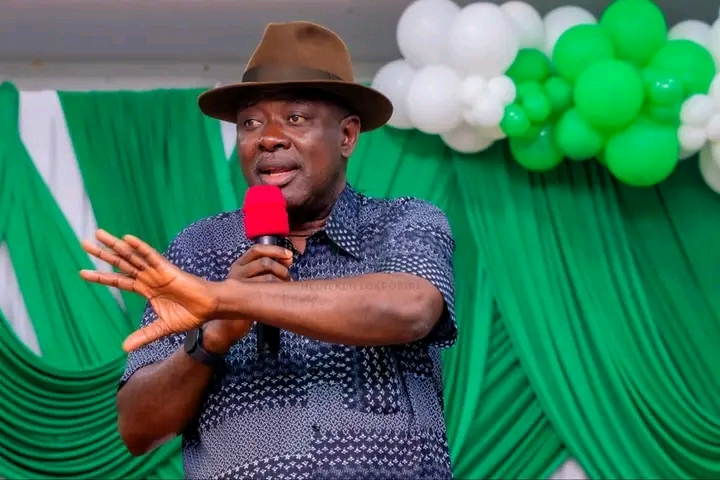
“Where would the money come from?” he asked. “The money is expected to come from the same oil sector.”
Lokpobiri said the subsidy system had also contributed to the financial weakness of the Nigerian National Petroleum Corporation before its transformation into NNPC Limited, arguing that the corporation had previously struggled to meet its obligations, including cash calls in joint venture arrangements.
“You recall that NNPC never paid any dividend. NNPC never made any profit at all,” he said. “What they were doing was shipping out crude and shipping in refined products. NNPC was the sole importer of refined products.”
He said the situation had become unsustainable because the corporation could not meet the financial commitments required to maintain its participation in oil production.
“If you say you own 60 per cent of a business, you also have to pay 60 per cent of the cost of doing that. That is the cash call,” Lokpobiri said. “But before this government came, NNPC couldn’t pay its cash call. Today, NNPC is not owing any cash call.”
The minister also linked the subsidy debate to the country’s wider fiscal position, saying debt servicing had consumed a large proportion of government revenue before the Tinubu administration came into office.
According to him, debt service was previously taking about 97 per cent of government income, a situation he described as unsustainable because the government was effectively borrowing to service existing obligations. He said the ratio had subsequently fallen to about 60 per cent.
One of the strongest arguments Lokpobiri advanced was that money previously committed to fuel subsidies is no longer confined to the petroleum sector but is distributed through the Federation Account to the federal, state and local governments.
“Today, all of you can attest to the fact that for the first time, at the end of every month, FAAC is convened and over ₦2 trillion is shared every month,” he said. “Some states get hundreds of billions a month.”
Official figures show that Federation Account allocations have indeed crossed the ₦2 trillion mark on some occasions. In March 2026, for example, ₦2.036 trillion was distributed to the three tiers of government, according to the Federal Ministry of Finance.
But Lokpobiri’s broader argument was that the increased allocations should also shift the burden of accountability away from Abuja alone.
“Before this government came in, 27 states could not pay salaries. Today, even the poorest states have enough money, not just to pay salaries, but also to do projects.”
He argued that Nigerians should therefore pay greater attention to what state and local governments do with the resources they receive.
“The proceeds from subsidy removal, are shared among the three tiers of government: federal, state and local government,” he said. “But instead of people holding their state governments accountable, their local governments accountable, everybody is looking at the federal government.”
Lokpobiri also rejected allegations that the resources released by subsidy removal were not being properly utilised by the Federal Government.
“That statement is absolutely false,” he said.
He cited programmes including the Nigerian Education Loan Fund, NELFUND, CNG and clean cooking programmes as examples of interventions that, in his view, demonstrate how government is deploying resources freed from the old subsidy arrangement.
Culled from southernexaminer.com


About the Author