 0
0
 0
0
Chief Simeon Olaosebikan Adebo was one of Nigeria’s most distinguished civil servants and diplomats of the twentieth century. A trained lawyer, seasoned administrator, and senior United Nations official, Adebo played a pivotal role in shaping Nigeria’s post-colonial public service and its early international diplomatic presence. His career spanned regional administration, global diplomacy, and academic leadership, reflecting a rare blend of local governance experience and international statesmanship.
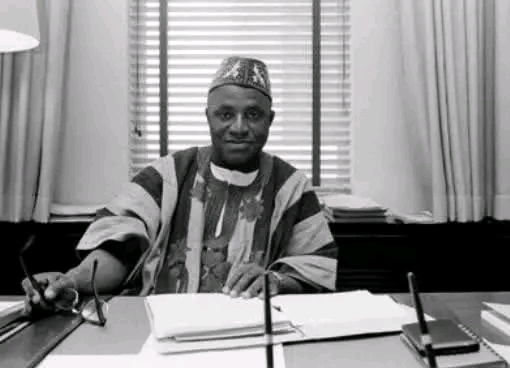
A 1972 photograph taken in New York captures Adebo during the later phase of his international service, at a time when he was concluding a notable career within the United Nations system.
Early Life and Education
Simeon Olaosebikan Adebo was born in 1914 in Abeokuta, in present-day Ogun State, Nigeria. He received his secondary education at King’s College, Lagos, one of Nigeria’s most prestigious colonial-era institutions, known for producing many of the country’s early political and administrative elites.
He proceeded to the University of London, where he studied law. After completing his legal education, he was called to the Bar in England before returning to Nigeria to begin a career in public service rather than private legal practice—a decision that would define his lifelong contribution to governance and diplomacy.
Civil Service Career in Western Nigeria
Upon his return to Nigeria, Adebo joined the Regional Ministry of Finance and the Treasury in the Western Region. Through competence and administrative discipline, he steadily rose through the civil service ranks.
In 1961, he was appointed Head of the Civil Service and Chief Secretary to the Government of Western Nigeria, making him the highest-ranking civil servant in the region. In this capacity, Adebo played a central role in policy coordination, administrative reform, and the functioning of the regional government during a politically sensitive period in Nigeria’s First Republic.
His tenure was marked by professionalism and a commitment to institutional governance at a time when Nigeria’s young democratic structures were still evolving.
Diplomatic Career at the United Nations
In 1962, Chief Adebo was appointed Nigeria’s Permanent Representative to the United Nations, a position he held until 1967. During this period, Nigeria was actively asserting its voice on global issues, including decolonisation, African unity, peacekeeping, and international development.
Following his service as Permanent Representative, Adebo transitioned into the United Nations system itself. He was appointed United Nations Under-Secretary-General and served as Executive Secretary (also referred to in some records as Executive Director) of the United Nations Institute for Training and Research (UNITAR).
He held this position until 1972, working from New York. At UNITAR, Adebo was involved in capacity-building initiatives aimed at strengthening governance, diplomacy, and administrative competence in newly independent and developing countries—work that aligned closely with his own professional background.
Academic and Ceremonial Roles
Beyond government and diplomacy, Chief Adebo also contributed to Nigeria’s academic and institutional life. He served as Chancellor of the University of Lagos (UNILAG), a ceremonial but influential role reflecting national recognition of his integrity, experience, and service.
His involvement in higher education symbolised the close relationship between Nigeria’s early civil service leadership and the development of its post-independence universities.
Later Life and Death
Chief Simeon Olaosebikan Adebo remained a respected elder statesman after his retirement from international service. He died in 1994, leaving behind a legacy defined by administrative excellence, international credibility, and quiet but enduring influence on Nigerian public life.
Legacy and Historical Significance
Chief Adebo belongs to a generation of Nigerian leaders who helped build the foundations of public administration and diplomacy in the immediate post-independence era. His career illustrates:
The transition of Nigerian elites from colonial training to national leadership
Nigeria’s early engagement with multilateral diplomacy
The importance of professional civil service in governance
Today, he is remembered as a model public servant whose impact was felt both within Nigeria and on the global stage.
References
United Nations Institute for Training and Research (UNITAR) historical records
United Nations archives on Nigerian Permanent Representatives
University of Lagos (UNILAG) records of past Chancellors.
SB E-news


About the Author