0
0
 0
0
Aare Amerijoye Dotb
In the theatre of power, where ambition often masquerades as vision and repression is dressed up as discipline, many rulers fall into the delusion that they are untouchable, irreplaceable, and divinely ordained. But history, in its unrelenting justice, has a way of humbling the proud and exposing the fraudulence of carefully constructed illusions. If we must discuss the anatomy of autocratic collapse and the poetic justice of failed strongmen, then the tales of Yahya Jammeh of The Gambia and Laurent Gbagbo of Ivory Coast offer hauntingly familiar echoes for Nigeria’s current political landscape under President Bola Ahmed Tinubu.
Yahya Jammeh came to power not through democratic ballots but through the barrels of guns in 1994. A young army lieutenant with little political sophistication but an overabundance of ambition, he swiftly dismantled democratic structures and constructed a personality cult rivaling those of 20th-century dictators. His official title, “His Excellency Sheikh Professor Alhaji Dr. Yahya A.J.J. Jammeh Babili Mansa”,was not satire; it was state protocol.
He claimed he could cure AIDS with bananas and herbs, that he could ban witchcraft with edicts, and that the Gambia would be an Islamic republic ruled by divine decree. His opponents were jailed, disappeared, or driven into exile. Human rights violations under Jammeh were so brazen that even the dead must have flinched in their graves. According to Human Rights Watch, his regime was marked by enforced disappearances, extrajudicial killings, torture, and arbitrary arrests. It was not leadership,it was tyranny marinated in mysticism.
Yet, in 2016, the impossible happened. In an election Jammeh thought he had gamed, he lost. The unlikely victor was Adama Barrow, a former Argos store security guard in London, a political novice whose campaign relied on honesty, humility, and the pent-up anger of a long-oppressed people. Barrow secured 43.3% of the vote to Jammeh’s 39.6%.
For a moment, Jammeh did the unthinkable,he conceded defeat. But the dictator in him couldn’t resist. Days later, he reversed himself, claiming irregularities, and plunged the country into crisis. But ECOWAS, led by Nigeria and Senegal, had had enough. A military intervention was prepared. The regional body moved swiftly, and Jammeh, with his long robes and longer ego, was forced to flee into exile in Equatorial Guinea. The man who once bragged about ruling for a billion years could not even last one more month.
Now let us take a look at the Ivorian strongman, Laurent Gbagbo, a professor of history turned practitioner of infamy. Gbagbo, who styled himself as a man of the people, turned into a demagogue when power nestled too comfortably in his palms. In 2010, after a contested election in which he lost to Alassane Ouattara who won 54.1% of the vote, Gbagbo refused to leave office. What followed was a grotesque dance of delusion. His regime orchestrated a bloody crackdown on civilians and ignited a civil conflict that left over 3,000 dead.
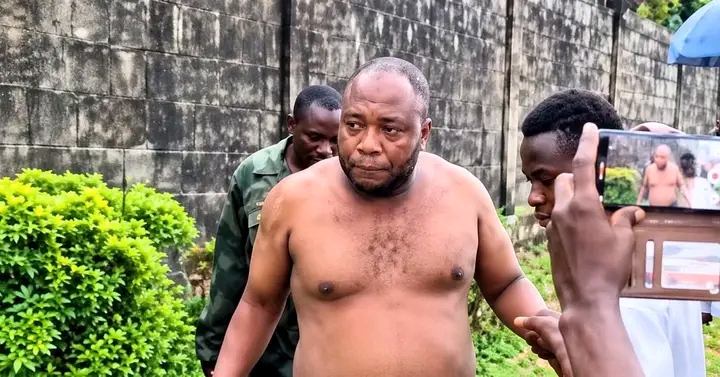
He barricaded himself in the presidential palace while his forces committed unspeakable atrocities. It took a combination of French military intervention and Ouattara’s forces to drag him out of his bunker like a frightened animal clutching the Constitution in one hand and his shattered pride in the other.
Gbagbo was taken to the International Criminal Court in The Hague, the first former head of state to stand trial there. Although he was eventually acquitted on the grounds of insufficient evidence, the symbolism was irreversible, power must answer to justice, and thrones built on blood shall be buried in shame.
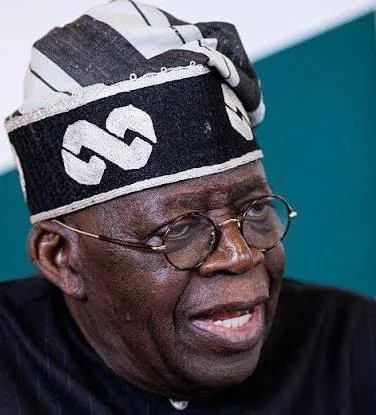
These two stories, while geographically distant, converge in spirit and circumstance with what is unfolding in Nigeria. President Bola Ahmed Tinubu, a man once admired for his political genius and democratic credentials, is now increasingly viewed as a leader out of touch with the pains of his people.
Since his inauguration, the economy has sunk into abyssal depths. Inflation has soared to a staggering 33.69% as of April 2025. The naira dances like a drunken puppet on the foreign exchange stage, trading at over ₦1,500 to the dollar. Fuel prices have climbed beyond ₦900 per litre, making transportation a luxury and food unaffordable. According to the National Bureau of Statistics, over 133 million Nigerians now live in multidimensional poverty.
Yet, in the midst of this suffering, the president and his party sing songs of reform. They talk about subsidy removal as if it were a messianic act, not a brutal economic execution. They tell tales of a rebounding economy while children die from malnutrition, and breadwinners queue at ATMs only to withdraw shadows. They host extravagant parties while civil servants go underpaid. They campaign endlessly while governance lies abandoned like a sick child in a broken hospital.
To add insult to injury, the APC engages in Machiavellian defections, believing that politics is a numbers game rather than a mission of nation-building. But history is watching, and history remembers.
In the midst of this political desolation stands Atiku Abubakar, a seasoned statesman whose ideas and experience offer a refreshing contrast. Atiku speaks of restructuring not as a slogan but as a socioeconomic reconfiguration. He envisions a Nigeria where state police can tackle insecurity, where resource control is decentralized, and where education is a right, not a privilege. His economic proposals, focused on job creation and infrastructural rebirth, are grounded in pragmatism, not propaganda.
Atiku’s message is not one of vengeance or bitterness but of vision. He is not asking for power to avenge a political past but to redeem a national future. In a nation drunk on propaganda, Atiku is a sobering dose of realism. In a house haunted by ghosts of unfulfilled promises, he offers the light of practicality and patriotism.
The downfall of Jammeh and the disgrace of Gbagbo are not isolated tales. They are prophetic templates. When leaders lose the moral license to lead, the people, history, and even fate conspire to end their reign. No matter how high they soar on the wings of manipulation and media control, the ground is always waiting.
So, to those who believe they are ten steps ahead in the game of politics, here is a warning soaked in the blood and tears of Africa’s history: when the people awaken, no power, no palace, no propaganda can protect a ruler from the force of democratic reckoning. The chessboard can be flipped, and kings can fall, especially when they forget the pain of the pawns.
Aare Amerijoye DOT.B
Director General
The Narrative Force.
SB E-news
SB events magazine
Efficiency magazine
Efficiency award for Excellence EAE.


About the Author