0
0
 0
0
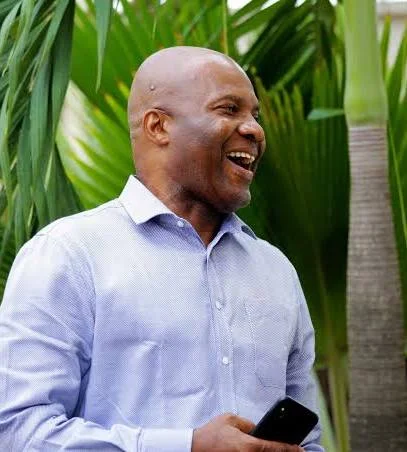
Aare Amerijoye DOT.B.
One of the most unfortunate manifestations of political desperation is the reckless attempt to distort historical facts to justify an untenable argument. APC and her apologists, in their habitual mischief, have relentlessly manipulated Nigeria’s historical trajectory by falsely incorporating the years of military rule into discussions about rotational presidency. This deliberate act of revisionism is not only intellectually dishonest but also a blatant attempt to deceive and confuse unsuspecting Nigerians.
To set the record straight, the concept of rotational presidency was non-existent during Nigeria’s long years of military rule. The military era, spanning from 1966 to 1999 (with brief civilian interruptions in 1979–1983 and 1993), was defined by forceful takeovers, military decrees, and autocratic governance, a stark contrast to the principles of democracy, where leadership is determined through electoral processes. It is, therefore, an absurdity of monumental proportions to suggest that military governments, which were enthroned by coups, should be considered in discussions of rotational presidency, a principle that emerged solely in the democratic era.
Nigeria’s military rule officially began with the January 15, 1966 coup, which saw Major-General Johnson Aguiyi-Ironsi emerge as Head of State after the violent overthrow of Prime Minister Sir Abubakar Tafawa Balewa and key political leaders of the First Republic. The coup, led by young military officers under Major Chukwuma Nzeogwu, had no democratic undertone and certainly did not subscribe to any idea of rotational leadership. It was simply a forceful seizure of power, much like the coups that followed.
Barely six months later, on July 29, 1966, a counter-coup led by Northern officers resulted in the assassination of Aguiyi-Ironsi, paving the way for General Yakubu Gowon to take power. This pattern of power being determined by military conspiracy, internal betrayal, and violent overthrow continued in the following years: General Murtala Muhammed took over from Gowon through a coup in 1975 but was assassinated in 1976, leading to General Olusegun Obasanjo assuming power.
In 1979, Obasanjo handed over to a civilian government, but democracy was short-lived as General Muhammadu Buhari toppled the civilian government of President Shehu Shagari in 1983. Buhari was later overthrown by General Ibrahim Babangida in 1985, who annulled the June 12, 1993 election and installed an interim government under Ernest Shonekan, which was removed by General Sani Abacha. After Abacha’s sudden death in 1998, General Abdulsalami Abubakar initiated Nigeria’s return to democracy in 1999.
Throughout these years, not once was leadership rotated based on a constitutional principle of fairness or regional balance. Power was seized through military planning and often maintained through dictatorship, with no regard for democratic ideals. The argument that the years of military rule should be factored into discussions of rotational presidency is not only fundamentally flawed but a brazen act of historical fraud.
The principle of rotational presidency was born out of Nigeria’s transition to democracy in 1999. After decades of military rule, political leaders across regions reached an understanding that power must rotate between the North and South to ensure national cohesion and prevent any single region from monopolising leadership. This agreement, though not enshrined in the 1999 Constitution, became an unwritten rule guiding Nigeria’s democratic process.
Thus, when democracy was restored in 1999, the Peoples Democratic Party (PDP), as the dominant party at the time, ensured that power went to the South, leading to the emergence of Chief Olusegun Obasanjo as President. This rotational arrangement continued as follows:
Olusegun Obasanjo (South West) – 1999–2007
Umaru Musa Yar’Adua (North West) – 2007–2010
Goodluck Jonathan (South South) – 2010–2015
Muhammadu Buhari (North West) – 2015–2023
Bola Ahmed Tinubu (South West) – 2023–Present
From the above, it is evident that rotational presidency exists solely within the democratic framework and has no bearing on Nigeria’s military past. As of today, the total years of democratic rule stand as follows:
Northern Presidents (10 years, 11 months)
Southern Presidents (17 years, 1 month)
These are the factual realities that APC and her apologists desperately attempt to distort by including the years of military rule in their calculations. Their argument is nothing but a deceptive ploy to manipulate the Nigerian people.
The APC’s attempt to merge military rule with democratic power rotation is not only historically inaccurate but a dangerous narrative aimed at justifying political injustice. If such falsehoods are allowed to gain traction, they could be used to manipulate electoral processes, suppress legitimate demands for power equity, and deepen regional divisions. Moreover, their insistence on distorting history exposes their incurable political sentiments. Their desperation to insert military rule into the equation is nothing but a feeble attempt to justify the unfair domination of power.
The idea of rotational presidency being formally enshrined in Nigeria’s constitution was first proposed during the 1994/1995 National Constitutional Conference convened by General Sani Abacha and was chaired by Justice Adolphus Karibi-Whyte.. Delegates at the conference recommended that the presidency should rotate between the North and South and among the six geopolitical zones to promote national unity and inclusivity.
This recommendation was included in the draft constitution produced by the conference. However, the draft constitution was never promulgated into law due to the sudden death of Abacha and the subsequent transition to a different constitutional framework. Consequently, rotational presidency was not enshrined in Nigeria’s constitution.
In 2005, President Olusegun Obasanjo organised the National Political Reform Conference, chaired by Justice Niki Tobi, to address issues like rotational presidency aimed at equitable power sharing. Despite gaining attention for promoting unity, implementation faced challenges due to political opposition coordinated by Tinubu, lack of constitutional framework, and vested interests, leaving it largely theoretical rather than practical.
During the 2014 National Conference convened by President Goodluck Jonathan, the issue of rotational presidency resurfaced. The conference, co-chaired by General Ike Nwachukwu and Mohammed Kumalia, endorsed the rotation of the presidency between the North and South and among the six geopolitical zones. This endorsement was part of broader recommendations aimed at promoting equity and justice in Nigeria’s political system. However, like the earlier attempt, these recommendations were not incorporated into the constitution, leaving rotational presidency as a political understanding rather than a constitutional mandate.
Despite these efforts, three geopolitical zones, North East, South East, and North Central, are yet to produce a democratically elected President since Nigeria’s return to civilian rule in 1999. The North West, South West, and South South have all had their turns, further highlighting the urgent need for equity and fairness in the future allocation of political power.
The truth remains unshakable: Rotational presidency is a product of democracy and has no connection to military rule. Military leaders were not elected but seized power through force and conspiracy. The APC’s attempt to distort history is a desperate move to justify an unjustifiable argument. Since 1999, power rotation has been a structured democratic practice, not a retroactive invention.
No amount of political propaganda can alter these facts. Nigeria’s democracy must be protected from revisionists who seek to undermine her foundational principles. It is time for APC and its apologists to stop their reckless distortion of history and accept reality.
SB E-news
SB events magazine
Efficiency magazine
Efficiency award for Excellence EAE.
www.sbenews.com.ng
www.efficiency.com.ng
ceo_sbenews@efficiency.com.ng
sbeventnews@gmail.com.ng


About the Author