0
 0
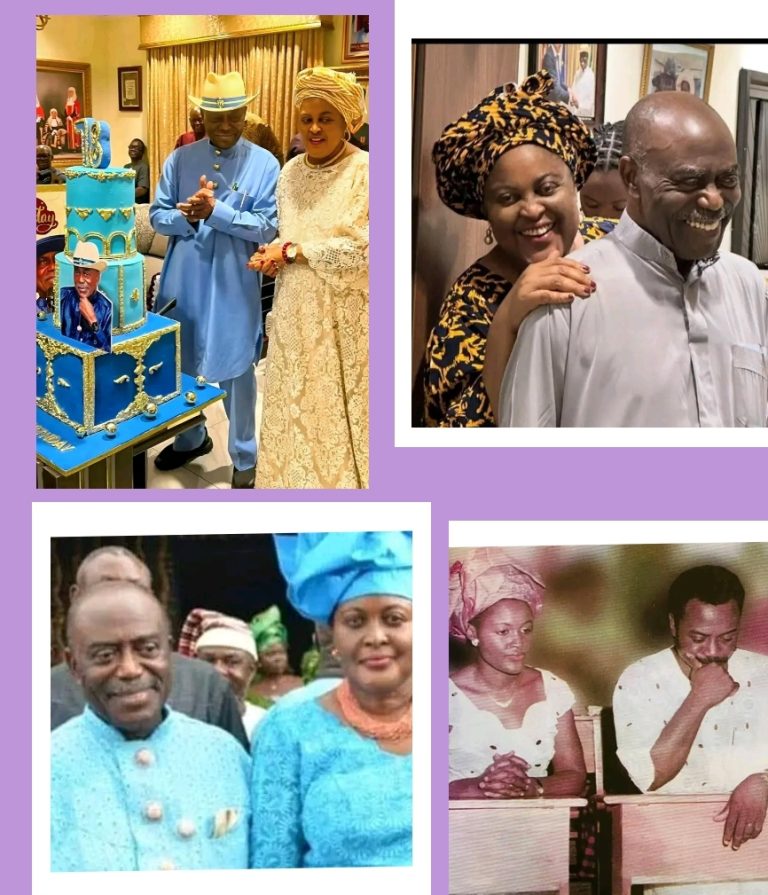
Good morning. Today is Sunday, Nov. 3, 2024, the 74th birthday of a pioneering figure in Nigerian and African medical history: the first Nigerian Professor of Anatomy and reproductive endocrinologist in the College of Medicine, University of Lagos. He achieved his professorship at just 32 years of age and co-led (with Professor Frank Osato Giwa- Osagie) the groundbreaking in-vitro fertilization project that resulted in Africa’s first test-tube baby in 1986. He represents a defining moment in the field of Anatomy in Nigeria, following in the illustrious footsteps of pioneers who came before him, such as Professor Thomas Adesanya Ige Grillo, and Professor Ayodele Babajide Olukoya Desalu.
How shall we honor him today on his birthday? He has been described as “a riddle wrapped in a mystery inside an enigma,” echoing Sir Winston Churchill’s words, while others associate him with his Medical Art Centre in Lagos. The center, under his leadership, recently received ISO 9001:2015 certification from IEMA Standards Ltd., a milestone demonstrating its adherence to international standards of excellence in fertility and reproductive health after over 30 years of dedicated service. Through his expertise, Professor Ashiru has helped bring over 3,000 babies into the lives of families across Nigeria, West Africa, and beyond.
For myself, he was my Ph.D. advisor, a remarkable academic leader, and a trusted friend — a man whose professional acumen and character stand out even among his peers. To know Professor Ashiru solely in his adult accomplishments is to only partially understand him. His early life, as he shared four years ago with a major news network, sheds light on his unique journey, including his decision to withdraw from the 1995 race for Vice Chancellor of the University of Lagos — a role that went to Professor Jelili Adebisi Omotola.
Professor Ashiru was born in Ijebu-Ode, Ogun State, to a close-knit family that nurtured his academic excellence. His mother was one of Western Nigeria’s pioneering nurses, and his father was a tax inspector. He attended Christ Church School and Adeola Odutola College before earning a scholarship to study at the College of Medicine, University of Lagos, where he developed a passion for Anatomy. He began working as a student demonstrator, immersing himself in his field.
After completing his medical training, Dr. Ashiru explored multiple disciplines, including Surgery and Pediatrics. His mother’s work at her maternity center sparked his interest in reproductive medicine, though he initially hesitated due to the demands of obstetrics. During his National Youth Service Corps, he served as a surgeon lieutenant in the Nigerian Navy, but limited advancement led him back to the University of Lagos, where he impressed Professor William Kenneth Metcalf, an external examiner from the University of Nebraska. This connection led him to the United States to study reproductive research with Dr. Charles Blake, where his work on hormonal mechanisms became the foundation of his IVF career.
Upon his return to Nigeria, Dr. Ashiru was encouraged to remain in the U.S. by his mentors, yet he felt compelled to address the need for anatomy professors at home. He developed a postgraduate training program at the University of Lagos, returning once again after becoming an IVF specialist in the U.S., where he faced challenges of racial discrimination. Driven by his dedication to educating Nigerians, he launched “Reproductive Health Magazine” to raise awareness of infertility issues.
Attaining his professorship at a young age, he faced resistance from some senior colleagues due to his pioneering IVF work. However, he received significant public support, including from Ladi Bonuola, editor of “The Guardian”, who encouraged celebrating Nigerian achievements.
In his work, Professor Ashiru emphasizes empathy and respect, aware that many patients have long sought the ability to conceive. He advises couples to seek treatment together, noting that infertility can affect either partner. In addressing faith-based concerns about IVF, he believes that scientific advancements complement divine will, and he prays for each procedure’s success.
Professor Ashiru’s personal life has also been a source of strength. He met his wife through family ties in Ijebu-Ode, supported by their fathers’ political connections. Though his mother and wife once discouraged him from vying for the Vice Chancellor role, preferring he remain focused on his impactful work in reproductive medicine. None of Ashiru’s children pursued medicine, considering it a lengthy and less lucrative career. However, they assist in his work: one as HR director, another in finance, and the third in administration.
In celebrating him, we honor a life dedicated to scientific discovery, patient care, and service to humanity. This is his story — a testament to his legacy in medicine and the lives he has profoundly touched.
A happy birthday to you sir.
Professor Abayomi Okanlawon, FAMedS, FNAMed.
SB E-news
SB events magazine
Efficiency magazine
Efficiency award for Excellence EAE.
www.sbenews.com.ng
www.efficiency.com.ng
ceo_sbenews@efficiency.com.ng
sbeventnews@gmail.com


About the Author