 0
0
 0
0
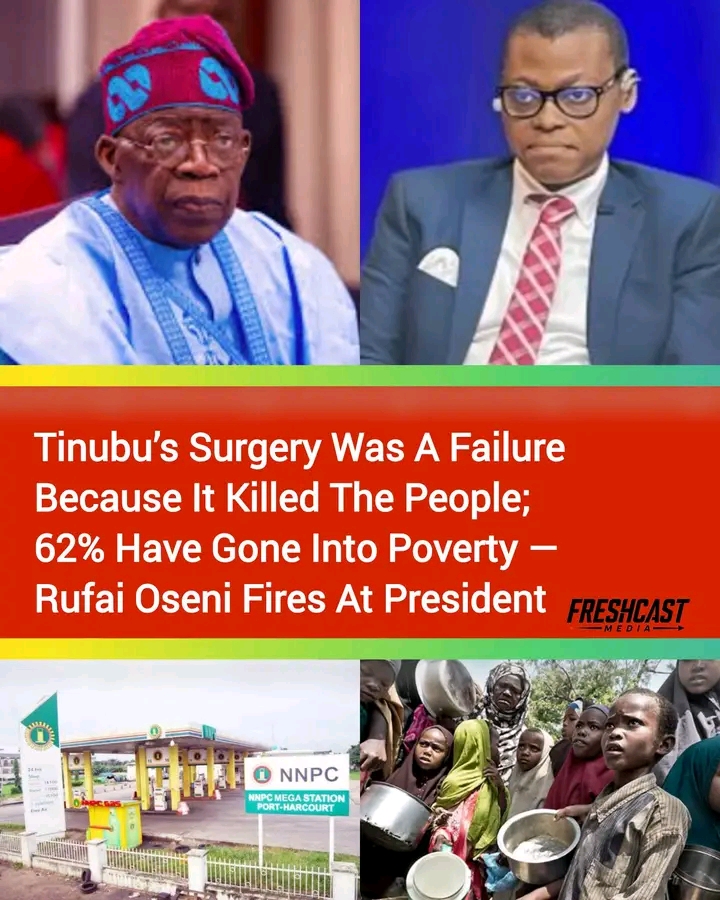
Rufai Oseni has taken aim at President Bola Tinubu over his Independence Day speech, accusing him of celebrating economic achievements without providing enough solutions to the suffering of Nigerians.
Speaking on Arise News on October 1, Oseni said Tinubu’s speech went exactly as he had predicted, arguing that the president would acknowledge that Nigerians were suffering but would still spend much of his address highlighting the achievements of his administration.
I predicted this speech yesterday. I knew he was going to thump his chest. I knew at some point in the speech he was going to say, I know people are suffering, but I knew he was not going to provide a lot of solutions to the suffering of the people, Oseni said.
He added that the president would highlight NELFUND, credit facilities, developments in different sectors and the stabilisation of the economy without explaining the cost of those achievements to ordinary Nigerians.
Oseni questioned whether Nigeria’s economy had genuinely recovered, arguing that the government could not continue to celebrate economic growth while millions of citizens were battling poverty, declining incomes and worsening living conditions.
62% OF NIGERIANS HAVE GONE INTO POVERTY
Oseni criticised the administration’s economic reforms, particularly the removal of fuel subsidy and the devaluation of the naira, arguing that the measures had placed a heavy burden on Nigerians.
Referring to Tinubu’s description of the previous subsidy system as morphine and the economic problems as cancer, Oseni said the outcome of the reforms had been devastating for ordinary citizens.
President Tinubu, you said others were giving morphine to the fuel subsidy situation. You exercised the cancer. Your surgery was a failure because it killed the people. The victim is dead, Nigerians, he said.
Oseni claimed that 62 per cent of Nigerians had fallen into poverty, arguing that many citizens had suffered such a significant loss of income that they might never recover fully.
He also linked the Nigeria Labour Congress’s repeated demands for higher wages to the erosion of workers’ purchasing power, arguing that the income people previously depended on had been severely weakened.
According to him, the government must explain the cost of its reforms rather than simply announcing that the economy is stabilising.
FOREIGN RESERVES, THE NAIRA AND HIGH INTEREST RATES
Oseni questioned the administration’s celebration of improved foreign reserves, arguing that the figures did not necessarily demonstrate that Nigeria had developed a productive economy.
He said money collected by the government was being retained and channelled into foreign reserves to demonstrate stability in the naira, while the manufacturing sector was bearing the cost of the policies used to achieve that stability.
He argued that interest rates had been kept high to attract liquidity and make government financial instruments more attractive to investors.
However, according to Oseni, manufacturers were struggling because they could not obtain bank loans at affordable interest rates to run their businesses, expand production and create jobs.
He questioned the relationship between these policies and the reported inflation rate of 15 per cent, noting that the interest rate had recently been reduced to around 23 per cent.
Oseni insisted that Nigeria had not yet experienced genuine economic recovery, arguing that a productive economy should generate sufficient revenue through businesses rather than depend heavily on high interest rates to attract investment into government instruments.
PRODUCTIVITY IS WHAT WILL STABILISE THE ECONOMY
To explain his argument, Oseni cited Denmark and Novo Nordisk, the pharmaceutical company known for producing weight-loss medicines.
He said the company had generated so much revenue at one point that its foreign-currency inflows could help stabilise the currency in its home country.
Oseni argued that this was what productivity should look like: having 10, 15, 20 or even 30 companies generating billions of dollars in revenue and bringing substantial money into the economy.
He maintained that Nigeria needed more productive companies capable of generating foreign exchange, creating employment and strengthening the economy instead of relying on policies that impose additional pressure on businesses.
DANGOTE REFINERY: OSENI CREDITS BUHARI AND EMEFIELE
Oseni also challenged the credit being given to the Tinubu administration over the Dangote Refinery.
He credited former President Muhammadu Buhari and former Central Bank Governor Godwin Emefiele for their roles in the project, arguing that their contributions should be acknowledged.
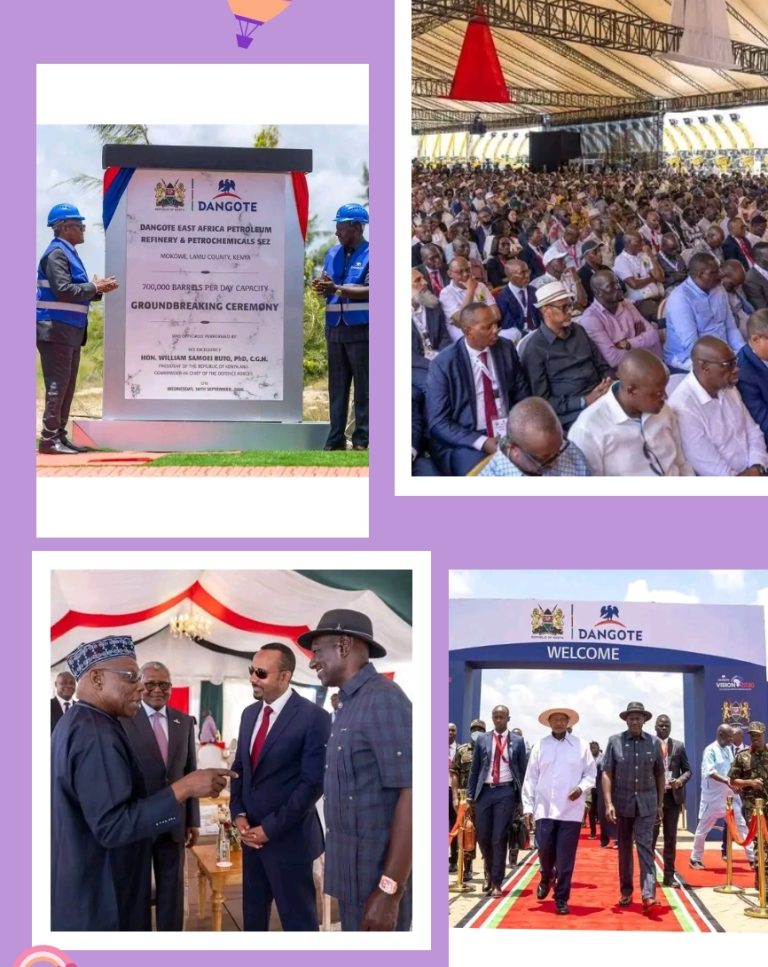
According to Oseni, Dangote is now expanding his refinery ambitions into other African countries, including Kenya, and the contributions of those who helped make the project possible should not be ignored.
He then questioned the government’s handling of Nigeria’s own refineries, particularly the Port Harcourt Refinery.
Oseni challenged the president over the commissioning of a refinery he described as non-operational, asking who had misled the president and why there had been no consequences.
He also demanded answers about the Port Harcourt Refinery, questioning what had happened to the facility after approximately $3 billion was reportedly spent on rehabilitation.
He argued that the government could not continue talking about turning the economy around while failing to provide clear answers about major projects involving substantial public expenditure.
IF SUBSIDIES HAVE BEEN REMOVED, WHY CAN’T THE GOVERNMENT FUND ITS BUDGET?
Oseni questioned why Nigeria was still struggling to fund its budget despite the removal of fuel and foreign-exchange subsidies.
He said the argument previously presented to Nigerians was that removing subsidies would free up money for the government to spend on development.
However, he pointed to reports that the budget period was being extended towards December because the government could not adequately fund capital expenditure.
He also said the Health Ministry and other sectors were complaining about insufficient funds, asking why the promised financial benefits of subsidy removal had not translated into adequate funding for government projects and services.
Oseni acknowledged that states were receiving more money in naira through federal allocations but questioned the actual value of those funds following the depreciation of the currency.
He explained that many major infrastructure projects have costs linked to the US dollar, including payments to contractors, making the exchange rate an important factor in determining what states can actually afford to build.
He also compared reported FAAC allocations of about $25 billion a few years ago with approximately $14 billion today, questioning the cost of the economic reforms.
Oseni further referred to losses he associated with economic shocks to GDP during the reform period and Nigeria’s debt, which he put at ₦166 trillion.
YES, THE ECONOMY IS GROWING, BUT WHAT IS THE EFFECT ON THE PEOPLE?
Oseni acknowledged that Nigeria had recorded economic growth of around 4 per cent but questioned what the figure meant for ordinary citizens.
He compared the figure with economic growth of approximately 5 per cent under Buhari following the COVID-19 shock, while acknowledging that Tinubu’s administration had recorded relatively consistent growth.
However, Oseni argued that the government should not use economic growth figures alone to claim that the country was turning the corner.
He questioned why Nigerians continued to experience poverty, suffering and deprivation if the reforms were delivering the promised recovery.
According to him, the quality of life of many citizens had deteriorated, and the administration needed to explain how its economic achievements were improving the daily lives of the people.
MORPHINE KEPT THE PATIENT ALIVE, BUT THE REFORMS HAVE KILLED THE PATIENT
Returning to the medical analogy, Oseni argued that the previous fuel subsidy system, despite its problems, had helped keep businesses operating by making fuel more affordable.
He said manufacturers could produce goods and maintain profit margins when fuel was subsidised, whereas the removal of the subsidy had significantly increased operating costs.
He cited MTN’s diesel expenses, which he described as running into more than ₦100 million daily, as an example of the financial pressure facing businesses.
Oseni argued that the subsidy had functioned like morphine by helping to keep the patient alive and the economy working.
He then questioned what the removal of the so-called cancer had achieved if the result was increased poverty and deprivation.
He also challenged Tinubu’s proposed solutions, including credit facilities, NELFUND and agricultural initiatives, asking what additional measures the government had to address the hardship Nigerians were experiencing.
FARMERS ARE STRUGGLING AS NIGERIA RELIES ON FOOD IMPORTS
Oseni questioned the administration’s approach to agriculture, criticising the reliance on food imports and import waivers as a way of keeping prices stable.
He asked whether importing food was a sustainable solution when the country should be supporting local farmers to increase domestic production.
He claimed that many farmers were struggling with debts and had repeatedly contacted him to complain about their situation.
Oseni called for their voices to be amplified, arguing that the government should address the difficulties facing local farmers instead of relying on imported goods.
He maintained that agricultural policies should help farmers produce more food locally, strengthen domestic production and improve the country’s ability to meet its food needs.
WHERE EXACTLY ARE WE TURNING THE CORNER?
Oseni also challenged Tinubu over insecurity, arguing that the security problems the president had promised to solve remained unresolved.
He questioned how the government could claim that Nigeria was turning the corner when insecurity, poverty and economic hardship continued to affect citizens.
He repeatedly asked where the country was turning the corner, insisting that the government’s claims of progress must be measured against the actual conditions Nigerians were experiencing.
He argued that the administration needed to explain not only what it had achieved but also the price Nigerians had paid for those achievements.
OSENI’S FINAL MESSAGE TO TINUBU: LET NIGERIANS BREATHE
In his closing remarks, Oseni recalled a song from the 1980s, released about 40 years ago under Tabansi Records, with the message that Nigeria would survive.
Referring to the song and its message, he argued that Nigerians could not continue singing that the country would survive while their leaders were, in his words, suffocating them.
Oseni’s central argument was that the government could not keep celebrating economic growth, foreign reserves and stabilisation while citizens continued to struggle with poverty, rising costs, insecurity and declining living standards.
He called on Tinubu to pay greater attention to the suffering of Nigerians and provide practical solutions that would improve their lives.
He ended with a direct appeal to the president:
Let Nigerians breathe. Don’t suffocate them.
Source: Rufai Oseni’s remarks during the Arise News morning programme on October 1, 2026.
SB E-news Efficiency


About the Author