0
0
 0
0
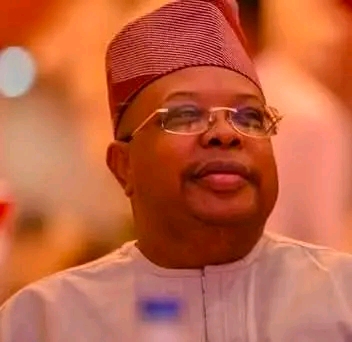
History does not always arrive with noise. Sometimes, it comes quietly, carrying lessons from the past for those wise enough to listen. One such lesson was recently captured in a simple but powerful analogy shared by Chief Adetunji Adedeji: a monkey may beg humbly for a banana, but once the banana is given, retrieving it becomes almost impossible.
In politics, power often behaves the same way. Once handed over without foresight, it rarely returns in the same form. As Ogun State approaches the decisive political moment of 2027, the question before us is not only who becomes governor, but what future that decision will create for generations unborn.
As students of history, we must remember the Yoruba experience of Ilorin Afonja and Ilorin Alimi. In the early nineteenth century, Ilorin was firmly within the Yoruba political and cultural world under Afonja, the Are-Ona-Kakanfo of the Oyo Empire. Faced with internal conflict and the weakening of Oyo authority, Afonja invited Shehu Alimi, a Fulani Islamic cleric, for strategic support. What began as political cooperation later produced consequences that permanently altered the destiny of Ilorin.
Over time, Ilorin shifted away from its original Yoruba political structure and became an emirate aligned with a different authority. A short-term political calculation became a long-term historical turning point. What was handed over in the name of convenience became difficult, if not impossible, to reverse.
This lesson is not about religion. It is not about ethnicity. It is about foresight, identity, and the consequences of political decisions. In Yoruba political thought, leadership has never been merely about popularity, personal friendship, or temporary advantage. It is rooted in knowledge of the land, respect for culture, understanding of the people, and loyalty to communal memory.
When leadership is disconnected from these foundations, governance becomes vulnerable to external influence, private loyalty, and political dependency. Such arrangements may appear convenient for a season, but history teaches us that they can become costly for a people and their future.
This is why the Ogun 2027 conversation must be approached with wisdom and restraint. Ogun State is not a political vacuum. It is a land of thinkers, reformers, warriors, entrepreneurs, and deeply conscious communities. Its future must not be decided through sentiment, narrow alliances, or short-term political convenience.
His Excellency, Prince Dapo Abiodun, CON, stands today not only as the sitting Governor of Ogun State, but also as a custodian of its political continuity. The responsibility before him is greater than succession politics. It is a responsibility to history.
For Ogun West in particular, this moment is critical. The zone has waited long enough. It is blessed with competent, tested, and culturally grounded sons and daughters who understand the terrain, the people, and the history of Ogun State. To suggest, directly or indirectly, that Ogun must look outside itself for leadership is to underestimate its own human capital and to flirt with avoidable danger.
As the Yoruba would say, “Ní Ìpínlẹ̀ Ogun, a mọ ara wa” — in Ogun State, we know ourselves. A people who know themselves must not outsource their future.
My respectful counsel to His Excellency, Prince Dapo Abiodun, is therefore sincere and direct: consult widely, listen deeply, and allow history, competence, culture, equity, and broad acceptability to guide the succession process. Personal bonds and temporary alliances may be useful in politics, but they must never be placed above the collective destiny of a people.
Leaders are remembered not only for roads built, projects commissioned, or offices occupied. They are remembered for the future they protected. History is kind to those who think beyond their tenure, but unforgiving to those who mortgage tomorrow for the comfort of today.
The Ilorin experience remains a permanent warning that power handed over without foresight can quietly rewrite identity, authority, and sovereignty. Ogun 2027 must not become another chapter in Nigeria’s long record of avoidable political regrets.
Once the banana of power is handed over carelessly, it may never be retrieved.
References
Ajayi, J.F.A. (1965). Christian Missions in Nigeria.
Ajayi, J.F.A. & Crowder, M. (1974). History of West Africa, Vol. II.
Falola, T. (1999). The History of Nigeria.
Fortes, M. & Evans-Pritchard, E.E. (1940). African Political Systems.
Hiskett, M. (1977). The Sword of Truth: The Life and Times of Shehu Usuman dan Fodio.
Johnson, S. (1921). The History of the Yorubas.
Peel, J.D.Y. (2000). Religious Encounter and the Making of the Yoruba.
Vansina, J. (1985). Oral Tradition as History.
Editorial Note
This article is adapted from the reflections of Chief Adetunji Adedeji, Olori Odo, Founder of Yewa Lawa, titled “Ogun 2027 and My Opinion,” and enriched through historical research responding to the question: “How and why Ilorin Afonja became Ilorin Alimi.”
The research and synthesis were conducted by Amb. Omobolaji Oluwafisayomi Sanni, Idofoi, Ayetoro, Yewa North Local Government Area, Ogun State, Nigeria.
SB E-news.


About the Author