 0
 0
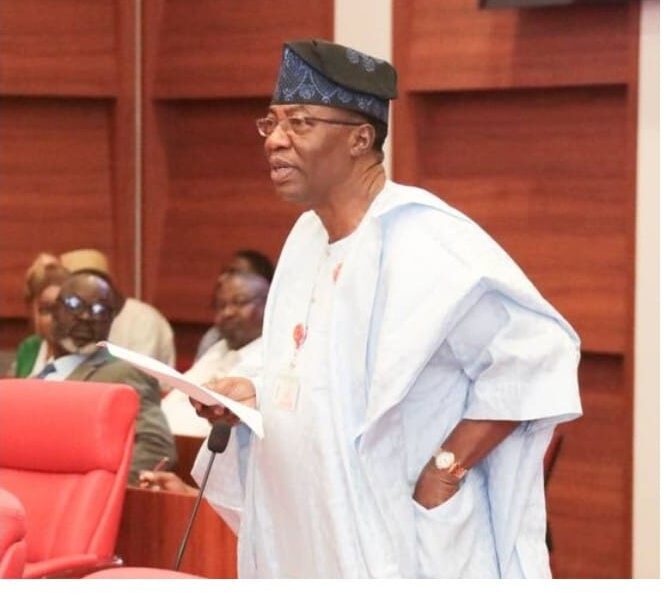
In governance, results are often judged by the size of budgets and the speed of project delivery. Yet Ogun State’s experience under former governor Otunba Gbenga Daniel between 2003 and 2011 offers a different lesson. It shows that true leadership is revealed in the ability to deliver lasting impact even when resources are severely limited.
During Daniel’s eight-year tenure, Ogun State’s monthly Internally Generated Revenue averaged about two hundred million naira, translating to roughly two point four billion naira annually.
Federal allocations were essential for survival, ranging between eight billion and one hundred billion naira annually. After salaries, pensions, and overheads were paid, little remained for capital expenditure. Every naira had to be carefully prioritised.
Today, under Governor Dapo Abiodun, Ogun State operates in a vastly different fiscal environment. Monthly Internally Generated Revenue now averages around fifteen billion naira, while federal allocations exceed eight hundred billion naira annually.
With total yearly inflows approaching one trillion naira, the contrast between the two eras highlights the level of discipline and ingenuity required to govern effectively in lean times, a defining feature of Daniel’s administration.
Daniel’s tenure was shaped by strict financial discipline. A former senior finance official described the period as one of constant fiscal triage, where choices were driven by necessity rather than convenience.
According to the official, there was no luxury of scale. Projects were selected carefully, sequenced deliberately, and executed only when funds became available.
Despite these limitations, the administration delivered projects that remain central to Ogun State’s development.
Major road corridors, including the Sagamu to Abeokuta route, were rehabilitated to improve movement and commerce across the state.
Sports stadia were constructed in several locations to encourage youth participation and community engagement.
The Oke-Mosan Government Secretariat was completed, providing a permanent and efficient administrative centre for the state.
Observers note that the slow pace of some projects reflected cash flow realities rather than lack of vision. The focus was on completion and durability, not speed or optics. Education stood at the centre of Daniel’s development strategy.
The administration recognised that human capital development was critical to long-term growth, even if the financial returns were not immediate.
The Tai Solarin University of Education was established as Nigeria’s first specialised university of education. Olabisi Onabanjo University was expanded and stabilised to improve academic standards and capacity.
Polytechnics and colleges of education were created across different parts of the state, widening access to tertiary education. A permanent NYSC Orientation Camp was also developed in Sagamu.
Although these investments did not immediately increase state revenue, they positioned Ogun State as a centre for learning and skills development, benefits that became clearer over time.
Even with limited financial capacity, the Daniel administration pursued industrialisation. The Ogun-Guangdong Free Trade Zone, Olokola Free Trade Zone, and Kajola Free Trade Zone were conceived as long-term economic platforms.
At the time, critics questioned whether the state could afford such ambitions.
Policy analysts now argue that these initiatives reflected foresight and strategic positioning rather than excess.
They laid important groundwork for Ogun State’s later emergence as an industrial destination.
Ogun State today enjoys significantly higher revenues than during the Daniel years. Monthly Internally Generated Revenue averages about fifteen billion naira, with federal allocations exceeding eight hundred billion naira annually.
This level of funding places the state among Nigeria’s most financially endowed sub-national governments.
While abundance allows for faster execution and multiple projects at once, analysts stress that the ability to extract maximum value from limited resources remains a critical benchmark of leadership.
During Daniel’s era, governance was defined by scarcity, careful sequencing, and prioritisation. In the current fiscal reality, governance is shaped by scale, volume, and speed.
Experts caution against measuring both periods with the same yardstick. They argue that Daniel’s strength lay in maximising limited funds, while abundance simply changes the nature of the challenge.
As one analyst observed, leadership is best tested when every naira matters. Ogun State’s development journey highlights an important truth. Budgets may grow, but vision, discipline, and strategic planning remain constant requirements for effective governance.
Otunba Gbenga Daniel’s years in office demonstrate how lean public resources can be managed to produce enduring institutions and infrastructure that continue to serve the people.
As Ogun State continues to enjoy the dividends of the Daniel business unusual style of governance several years after, his legacy stands as a reminder that the true measure of leadership is not how much is spent, but how wisely limited resources are used for the benefit of the people.
By Soke Adejobioro.
SB E-news.


About the Author