0
0
 0
0
The Story Behind One of Nigeria’s Most Iconic 1970s Mansions
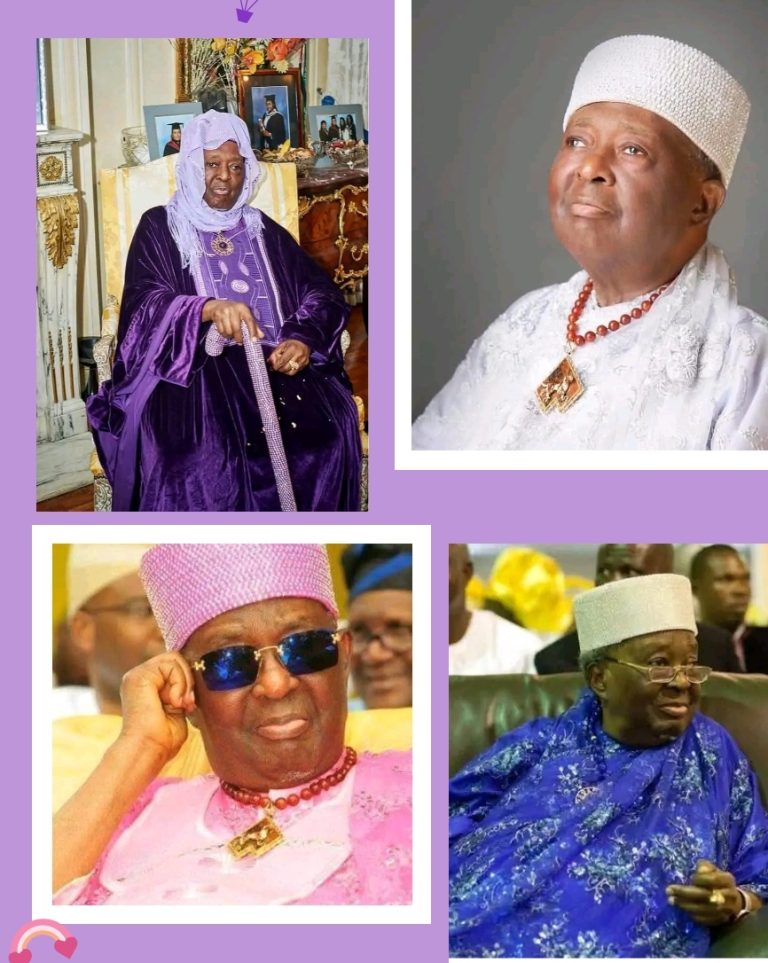
Chief Sonny Iwedike Odogwu (March 20, 1925 – November 5, 2018) was one of Nigeria’s most powerful business magnates, philanthropists, and traditional leaders. Known for his vast influence across insurance, hospitality, real estate, media, and manufacturing, he built an empire that earned him the revered title Ide Ahaba of Asaba—a cultural honour bestowed on illustrious sons of the ancient Delta city.
Of all the symbols of his wealth and legacy, none is as mysterious—or as widely remembered—as his iconic white mansion along the Asaba–Benin Expressway, popularly known as the Ide Ahaba Palace.
For thousands of Nigerians travelling through the old Bendel State from the 1970s to the 1990s, the gleaming structure was a landmark of wealth, modern architecture, and awe. Its striking white façade made it stand out like a monument in the tropical landscape.
Origins of the Mansion: A 1970s Architectural Marvel
Historical accounts and oral recollections suggest:
The mansion was built in the mid-to-late 1970s.
It reportedly cost around ₦25 million at the time—a staggering sum considering that ₦1 in the 1970s had the purchasing power of hundreds of thousands of naira today.
The structure was said to have been designed and constructed by Italian builders, which reflected the trend among wealthy Nigerians in the oil boom era who commissioned European contractors for luxury estates.
Though the exact construction company has not been fully confirmed, many speculate it was built by Cappa & D’Alberto, a renowned Italian construction firm responsible for numerous major architectural projects in Nigeria. However, no official record currently confirms this, and more archival digging is needed.
The mansion’s bold design—large white pillars, vast courtyards, and a palace-like silhouette—symbolized a fusion of European modernism with Nigerian cultural grandeur.
A Landmark of Old Bendel State
For travellers in the early 1980s and 1990s, the Ide Ahaba Palace was impossible to miss. Locals recall:
Its striking white walls visible from afar
The symmetry of its design
The reputation attached to the man who lived there
It quickly became one of the most talked-about private buildings in Bendel State, a symbol of what wealth looked like before the modern luxury estates of Lagos and Abuja.
Many people who passed through the Asaba route in the early 1980s, including those who travelled between Benin, Onitsha, Asaba, and Ibadan, still remember the mansion vividly.
Who Was Chief Sonny Odogwu?
Beyond the mansion, Chief Odogwu was one of Nigeria’s most influential businessmen.
Business Legacy
He founded or led major institutions including:
African Insurance Company Limited (AICL)
Sunny Motors
Grand Hotel Asaba
Robert Dyson and Diket Holdings (his flagship conglomerate)
Major investments in real estate, media, agriculture, and hospitality
He was widely respected as a strategic investor and philanthropist.
Traditional and Cultural Role
As the Ide Ahaba of Asaba, Odogwu played a key cultural role in bridging tradition with modernization. His palace was not only a residence but a symbol of the heritage of Asaba’s aristocratic society.
Controversies and Challenges
Even after his death, Chief Odogwu remained in the news due to:
A ₦26 billion legal battle with Access Bank Plc, tied to loans used for a hospitality project.
A highly publicized inheritance case involving parts of his estate.
These issues continued in court long after his passing, reflecting the complexity of managing vast private wealth in Nigeria.
Death and Legacy
Chief Sonny Odogwu died on November 5, 2018, at the age of 93. Tributes poured in from business leaders, traditional authorities, and government figures praising:
His influence on Nigerian industry
His contributions to Asaba’s development
His role in shaping the private sector during the post-independence era
Yet for ordinary Nigerians, his most unforgettable mark may still be the white Ide Ahaba Palace—a landmark of 1970s luxury whose story is still being pieced together from memory, newspaper archives, and the recollections of travellers.
What’s your story about this great man?
Sources
Vanguard Nigeria, “Business Icon, Sonny Odogwu, Dies at 87,” November 2018
The Guardian Nigeria, Archive reports on Odogwu’s business empire
Bendel State oral histories and traveller accounts (1970s–1990s).
SB E-news.


About the Author