0
0
 0
0
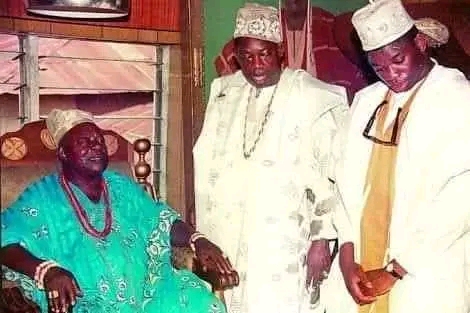
Chief (Dr.) Henry Fajemirokun (1926–1978) was a leading Nigerian entrepreneur whose innovative business ventures and corporate leadership helped shape Nigeria’s post-independence economic landscape. He was renowned for his pioneering efforts in commerce, maritime services, and industrial development, and played a key role in advancing indigenous participation in the Nigerian economy during the 1960s and 1970s.
Early Life and Education
Henry Fajemirokun was born in 1926 in Ile-Oluji, Ondo State, into a Yoruba family with deep cultural and community roots. He began his education at St Luke’s School, Oke-Igbo (1937–1940), before attending CMS Grammar School, Lagos (1941–1942), and later Ondo Boys High School (1942–1944). His formative years combined rigorous academic training with exposure to leadership and civic responsibility, which would later define his business career.
During World War II, Fajemirokun joined the Royal West African Frontier Force, serving in India, an experience that broadened his worldview and gave him early exposure to international operations. Following the war, he worked as a clerk in the Post and Telegraph Department, where he became active in the workers’ union and rose to president of the department’s ex-servicemen union in 1948 and president of the Post and Telegraph’s Clerical and Workers Allied Union in 1952.
Business Career and Achievements
In 1955, leveraging a loan from a relative, Fajemirokun ventured into private business, starting in the agricultural export sector, initially trading cattle bones. His business soon expanded to include hides, skins, rubber, coffee, and shea nuts. His reputation for reliability earned the trust of international buyers, who extended letters of credit to finance his operations.
By 1962, Fajemirokun diversified into maritime services, and by the mid-1960s, he had embarked on cement importation from Egypt and Poland, funded by a British bank in London. He also ventured into commodity brokerage and secured a seat on the London Stock Exchange in 1969, establishing himself as a formidable figure in global commerce.
His company, Henry Stephens, became a trailblazer in Nigeria’s oil and maritime sectors. It was the first indigenous company to obtain an oil prospecting license and operated the Henry Stephens Shipping Company, comprising the Ile-Oluji Line, Ifewara Line, and D.F Fajemirokun Line, among the first Nigerian-owned shipping lines.
Fajemirokun also played a pivotal role in Nigeria’s indigenization decree of 1972, acquiring and managing major foreign operations in Nigeria and becoming the sole distributor for Xerox. Though his attempt to acquire the Daily Times was denied under the Obasanjo administration, he successfully invested in Johnson Wax, Fan Milk, and other leading companies, solidifying his influence in the corporate sector.
Chieftaincy and Recognition
In recognition of his leadership and contributions to Yoruba society, Fajemirokun was awarded several traditional titles, including:
Yegbata of Ile-Oluji (1968), conferred by the Jegun
Asiwaju of Okeigbo (1971)
He also served as President of the Lagos, Nigerian, and West African Chambers of Commerce, representing Nigerian entrepreneurs on both national and regional stages.
Legacy
Chief Henry Fajemirokun is remembered as one of Nigeria’s pioneering business moguls whose vision and entrepreneurship contributed significantly to the country’s industrial, maritime, and commercial development. His career reflects the opportunities and challenges of post-independence Nigeria and exemplifies how indigenous business leaders shaped the nation’s economic identity.
Through his work, Fajemirokun inspired generations of Nigerian entrepreneurs, demonstrating that diligence, innovation, and strategic thinking could transform local enterprises into major industrial and commercial forces. His contributions to trade, shipping, and finance remain a celebrated part of Nigeria’s corporate history.
Death
Chief Henry Fajemirokun passed away in 1978, leaving behind a legacy of innovation, enterprise, and national development. His entrepreneurial spirit and civic engagement continue to inspire business leaders and historians alike.
Sources
Reminiscences of Nigerian Chambers of Commerce Archives
Historical accounts of Yoruba business elites.
SB E-news.


Related posts:
About the Author