0
0
 0
0
By Aare Amerijoye Dotb:
It was the hushed rhythm of Chief Ebenezer Obey’s Gbo temi playing faintly in the background that stirred the soul of this reflection. Reclining with Nnamdi Azikiwe’s My Odyssey across my lap, I found myself caught in an accidental harmony of melody and memory, sound and statesmanship, that sparked a revelation. The chords teased the air, Azikiwe’s words whispered through time, and in that quiet communion, the unfinished business of Nigeria made itself known. That moment, draped in contemplation and clarity, delivered a singular conviction: Atiku Abubakar is destined to become the President of Nigeria in 2027.
This isn’t a mere sentiment dressed as conviction, it is a reflection grounded in reason, lived history, and present-day necessity. In Atiku, we do not find a politician who stumbles into relevance through noise or novelty. We find instead a seasoned statesman who has walked the long and often thankless road of national service. He is not new to Nigeria’s political terrain, he helped shape it. Over four decades, Atiku has stood tall, contesting six presidential elections without inciting violence or exploiting ethnic division, a record almost monastic in today’s disorderly political theatre.
His time as Vice President (1999–2007) remains one of Nigeria’s most consequential periods of economic reform. It was during this era that the country transitioned from state monopolies to private innovation. Atiku’s hand was firm in the steering of the privatization policy that opened the door to Nigeria’s telecom revolution. What began as an unpopular policy is now a lifeline industry, contributing over 16% to our GDP. The seeds he helped sow now underpin our digital life, our communication infrastructure, and our economy’s survival. And yet, how quickly we forget builders in favour of showmen.
The very question arises, should such a figure be bypassed for those experimenting with governance on a trial-and-error basis? The answer, if not already clear, resounds in the numbers and the national pulse. In 2023, Atiku polled nearly 7 million votes across the federation. Atiku claimed twelve states outright and came second in twenty-one others. His performance wasn’t restricted to any single bloc. He wasn’t a regional hero or a religious candidate; he was, and remains, the only contender with measurable presence across all six geopolitical zones. Where others sought tribal echo chambers, Atiku knocked on the doors of unity.
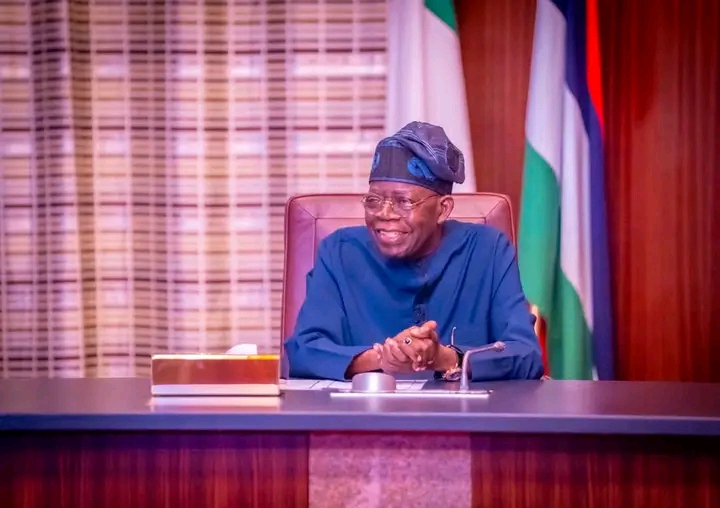
But perhaps the more stinging contrast lies in the present government’s staggering failure. In barely two years, the naira has nose-dived from ₦460 to over ₦1,500 to the dollar. Inflation, though now slightly eased, soared to nearly 34% in 2024, crippling households and choking businesses. The vaunted fuel subsidy was declared dead, only to return through shadows and technicalities. Official unemployment statistics may claim relief, but disguised joblessness persists, and so too does hunger. The Tinubu-led administration, instead of bringing decades of change, has condensed decades of disappointment into months. To quote Lenin, “There are decades where nothing happens, and weeks where decades happen.” In Tinubu’s Nigeria, weeks have brought unbearable decades.
Against this bleak backdrop, Atiku stands not as a messiah but as a prepared hand. His vision of economic revival is no theoretical promise; it is an extension of what he has already helped achieve. He understands governance as an ecosystem that thrives on clarity, competence, and inclusion, not improvisation and propaganda. This is not a man learning on the job; this is a man returning to the job he was born to finish.
2023 was a political awakening for Nigeria’s youth, but also a sobering one. Idealism surged through campuses and social media platforms. Yet, many mistook governance for performance, assuming likes could replace logistics and hashtags could replace handshakes. Peter Obi’s rise was remarkable, but as he himself acknowledged, Atiku is his elder brother and political mentor. The lesson is now plain: structure matters, alliances matter, ground game matters. The next political awakening must mature into precision, and in this transition from emotion to strategy, Atiku is not just relevant, he is essential.
Yet beyond economics and elections lies a deeper truth: Nigeria is broken in spirit. The cracks are not only fiscal, they are emotional, social, moral. We are a country in need of healing. And it is here that Atiku’s temperament becomes his most potent strength. He does not shout. He does not insult. He does not preach with venom. He simply shows up, with policy, with humility, and with a refusal to give up. That kind of steadiness is rare. That kind of resilience is presidential.
He has built, not just ideas, but institutions. The American University of Nigeria (AUN) stands tall in Yola as a testament to what private vision can do when public systems fail. Through his foundation, he supports displaced people in the North-East. His businesses employ thousands. And a few years ago, he earned an M.A. in International Relations from Anglia Ruskin University in Cambridge, UK,proving that even in his 70s, he continues to learn, evolve, and engage with modern governance dynamics.
If Nigeria were a patient on life support, Atiku would be among the very few with the composure and expertise to perform a delicate rescue, not out of desperation, but out of discipline.
This is not praise for praise’s sake. It is a moral appeal rooted in reality. As Azikiwe reminded us in My Odyssey, “History is not written by chance but by the will of those who rise above despair.” Atiku Abubakar has not only risen above despair, he has become a metaphor for the hope that endures beyond heartbreak.
And so, let it be known that in the year 2025, amid the betrayal of promises and the crumbling of institutions, a voice rose, firm and clear, that declared:“ATIKU ABUBAKAR – PRESIDENT, FEDERAL REPUBLIC OF NIGERIA, 2027.”
If something within you stirred while reading this, it is because truth has a frequency only honest hearts can hear. Let the conversations begin. Let the mobilisations commence. Let every Nigerian who believes in competence rise with one voice: Atiku is the answer. 2027 is the moment.
Aare Amerijoye DOT.B
Director General,
The Narrative Force
SB E-news
SB events magazine
Efficiency magazine
Efficiency award for Excellence EAE.


About the Author