 0
0
 0
0
The Public education remains an important part of Lagos State’s education system, providing learning opportunities for children from diverse socioeconomic backgrounds. However, concerns about the quality of teaching, learning facilities and academic outcomes have continued to shape conversations about public schools and parents’ choice of schools.
In Lagos Mainland Local Government, efforts to improve public education have brought renewed attention to the role of local authorities in addressing these challenges. In this exclusive interview, the Supervisor for Education, Hon. Oluseye Olofin, speaks with Awesu Isa about the council’s education policies, interventions in public schools, challenges facing the sector and plans to improve learning outcomes for pupils.
With 26 public primary schools and 3,720 pupils under its supervision, Lagos Mainland Local Government faces the task of ensuring that its schools provide an environment conducive to effective teaching and learning.
When you assumed office, what was your assessment of public schools in Lagos Mainland?
When I assumed office with the support of the Executive Chairman, Mayor Dr. Kolawole Emilagba, we recognized both the opportunities and the challenges within our public education system.
Public education remains the foundation of social development because it provides children from different backgrounds with access to learning. However, we must acknowledge that some of our public schools require improvements in infrastructure, classroom furniture, sanitation facilities, instructional materials, and the general learning environment.
My assessment is that our public schools have enormous potential, but that potential must be supported by adequate facilities, motivated teachers, effective supervision, and the commitment of parents and government. Every child in Lagos Mainland deserves access to quality education, regardless of family background. Our vision is to move from merely providing access to delivering quality education that produces confident, disciplined and productive citizens.
How many public primary schools are under Lagos Mainland and what is their condition?
We have a total of 26 Public Primary Schools with a total population of 3,720 pupils. These schools play a critical role in providing foundational education.
Regarding their condition, schools have varying needs. While some have relatively functional learning environments, others require attention in areas such as classroom rehabilitation, desks and chairs, toilet facilities, teaching aids and general maintenance. This is already being taken care of with the help of the Executive Chairman.
As Supervisor, I believe the first step is to identify the specific needs of each school and prioritize interventions according to urgency, student population and available resources. We must move away from a one-size-fits-all approach and develop a school-by-school improvement strategy.
What is your definition of standardization for public schools?
Standardization means ensuring that every public school meets an acceptable level of quality in infrastructure, teaching, learning, safety, sanitation, and academic performance.
A standard public school should have a conducive learning environment with adequate classrooms, proper ventilation and safe buildings; functional furniture for pupils and teachers; clean and accessible toilets; qualified and committed teachers; adequate instructional materials including textbooks and digital resources where available; effective monitoring of teaching quality and pupils’ progress; and a safe and inclusive environment.
This Administration’s belief is simple: A child attending a public school in Lagos Mainland should not receive an inferior educational experience simply because their parents cannot afford private school fees.
What are your key priority areas?
Our priorities are centred on creating an environment where teachers can teach effectively and pupils can learn comfortably. We have identified five critical areas.
First, infrastructure, improving classrooms, roofs, floors, windows, doors and ventilation. Second, furniture and classroom facilities. Third, sanitation and hygiene; functional toilets, clean water, proper waste disposal. Fourth, instructional materials and technology; textbooks, teaching aids and digital learning opportunities to prepare pupils for a changing world.
Fifth, and most important, teacher development and motivation. Teachers are central to success. We have carried out professional development and effective classroom management training in conjunction with NITT recently.
These priorities require collaboration between Local Government, Lagos State Government, parents, communities and responsible private partners.
Can you highlight two or three schools you have already intervened in?
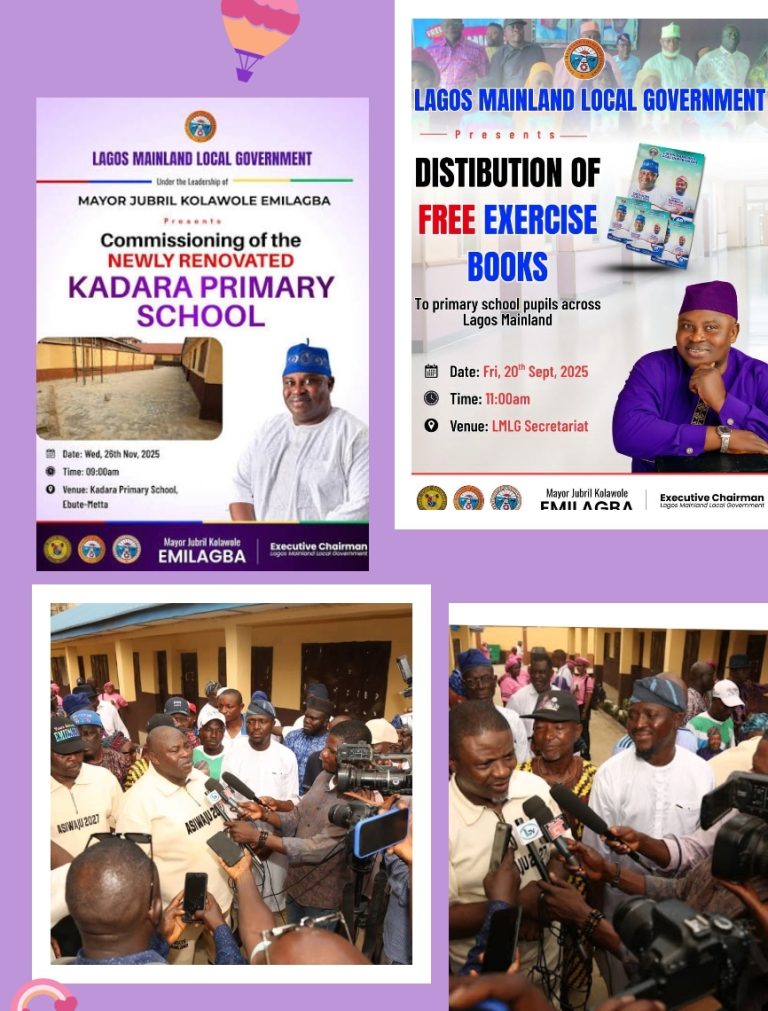
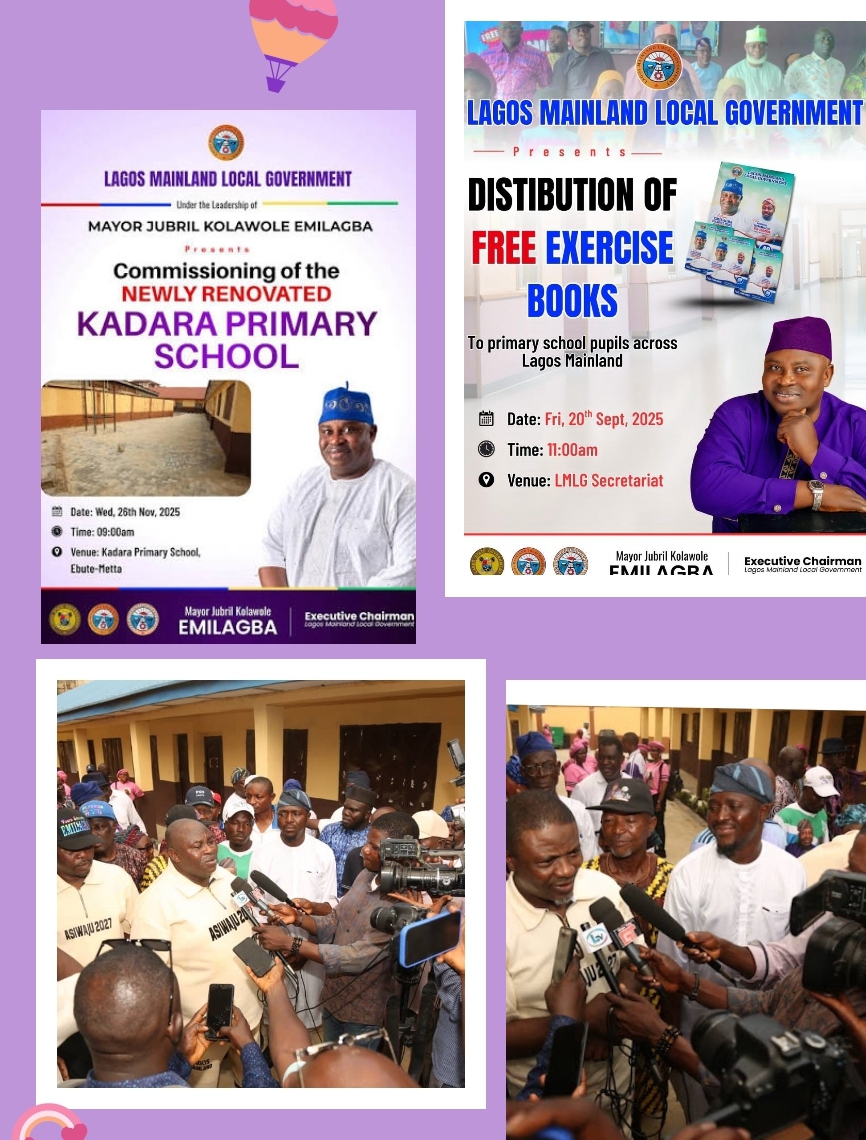
One important area is improvement of access to educational resources. For example, we completed the overhauling of UNA Primary School, Oyingbo, with a modern ICT room and synthetic field for pupils. Also at Kadara Primary School and Ijero Primary School, Abule Nla, we initiated ICT Centre projects to expose pupils to digital learning and bridge the digital divide.
Another area is educational support for pupils who face financial barriers through distribution of school materials and support for educational programmes to reduce burden on parents and keep children in school.
Our commitment is not merely to announce projects but to ensure that interventions translate into tangible improvements.
Some say public schools are failing because education is now seen as a business for private schools. How are you making public schools competitive again?
I believe public education should not be viewed as an inferior alternative. It should be a strong, credible and affordable option that parents can trust.
Private schools have grown because of parental expectations, perceptions of performance, class sizes, discipline and facilities. We must study these concerns objectively.
Our responsibility is to strengthen public schools so parents choose them because of quality. We can achieve this through improved infrastructure, better teaching resources, effective monitoring, stronger school management, teacher development and greater parental involvement. We must also encourage healthy competition among schools by recognizing good performance and sharing successful practices.
My position is that public education must become a source of pride, not a last resort. We may not resolve every challenge overnight, but through consistent investment and accountability, we can rebuild public confidence.
What is your plan to reduce out-of-school children?
It requires awareness, accessibility, family support, community participation and effective monitoring.
First, identifying out-of-school children with reliable data. Second, community sensitization involving parents, traditional leaders and religious institutions. Third, supporting vulnerable families who struggle with costs of uniforms, materials and transportation.
Fourth, improving the school environment itself; parents enrol children when they see safe classrooms and committed teachers. Fifth, strengthening enrolment and attendance monitoring. Sixth, promoting inclusive education for children with disabilities.
Our goal is a system where no child is forgotten and every child has a fair opportunity to learn and contribute to society.
To what extent are you working with Lagos SUBEB, Ministry of Education and private partners?
Education is a shared responsibility. At Local Government level, our role is identifying community needs, supporting initiatives, monitoring local concerns and advocating for improvements requiring State intervention.
SUBEB is an important stakeholder in basic education, while the Ministry of Basic and Secondary Education plays key roles in policy, standards, staffing and curriculum.
We must continue to strengthen communication with these institutions so that needs of schools in Mainland are properly documented. Private-sector participation can also make a difference ; corporate organizations, philanthropists, alumni associations and NGOs can support through infrastructure, ICT, scholarships and teacher development.
However, such partnerships must be transparent, properly coordinated and focused on genuine needs.
How do you measure success? What should residents expect in the next one year?
Success should be measured by visible improvements and verifiable results, not by number of meetings.
Indicators include improved school facilities, better access to learning materials, increased enrolment and attendance, improved academic performance in literacy and numeracy, teacher effectiveness, and parental satisfaction.
Over the next 12 months, residents should expect us to continue identifying gaps, advocating for better facilities, supporting learning initiatives, strengthening engagement with schools and working with relevant agencies. We will prioritize based on available resources and urgency.
I do not want to promise what cannot be delivered. I want our performance to be judged by improvements we can demonstrate.
Parents still complain about lack of chairs, toilets, and teachers. What do you say to them?
First, I want parents to know that their concerns are legitimate and deserve serious attention. Every parent wants their child to learn in a safe, comfortable environment. We must not dismiss these complaints.
Some matters can be addressed locally, while others, particularly teacher recruitment and major capital projects, may require action by State Government authorities. Our responsibility is to document complaints, verify needs, prioritize urgent cases and work with appropriate authorities.
I encourage parents to communicate specific concerns through school heads and relevant education offices so problems can be properly recorded. Where immediate intervention is possible within our authority and resources, we will pursue it. Where the solution lies elsewhere, we must advocate persistently.
Your final charge to teachers and students?
My charge to teachers is to remember that they are not merely teaching subjects; they are shaping lives, building character and preparing the next generation of leaders. Remain dedicated, punctual, disciplined, innovative and compassionate.
To our students, your background does not have to determine your future. Take your studies seriously, respect your teachers and parents, remain disciplined and avoid distractions.
To parents, remain actively involved. To community leaders and philanthropists, I appeal for greater support for our public schools. The responsibility of educating our children cannot be left to government alone.
When we invest in education, we invest in peace, economic growth, responsible citizenship and the future of Lagos Mainland. Our children are our future, and that future deserves our very best.
From overcrowded classrooms to ICT hubs and synthetic fields, the journey to reposition public schools in Lagos Mainland remains a work in progress. Yet, the interventions taking shape in communities such as Oyingbo, Kadara and Abule Nla raise an important question: can sustained investment in public education restore parents’ confidence in government-owned schools? The answer will ultimately depend not only on the facilities provided but also on the quality of teaching, students’ academic performance and the ability to sustain these improvements.
SB E-news Efficiency


About the Author